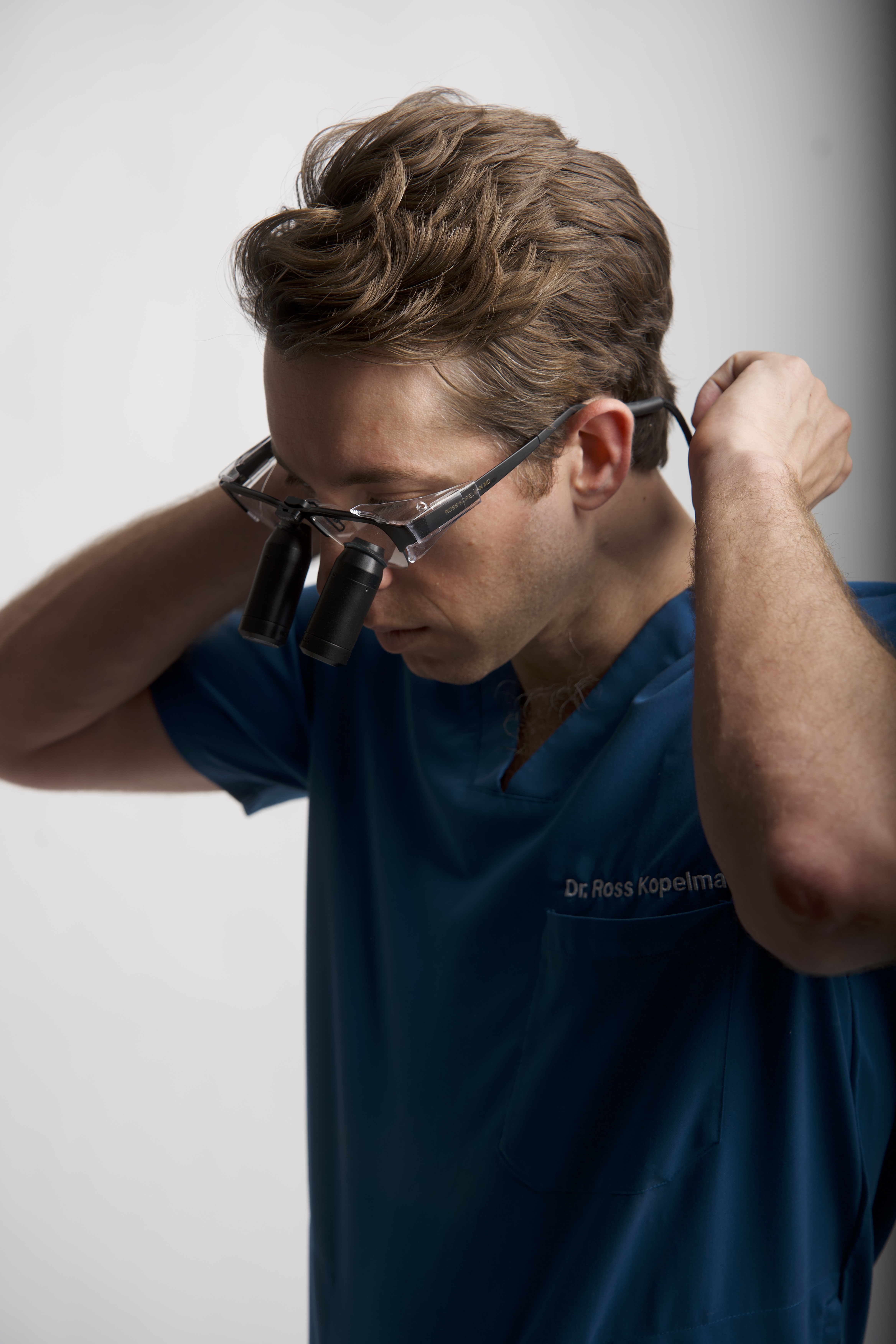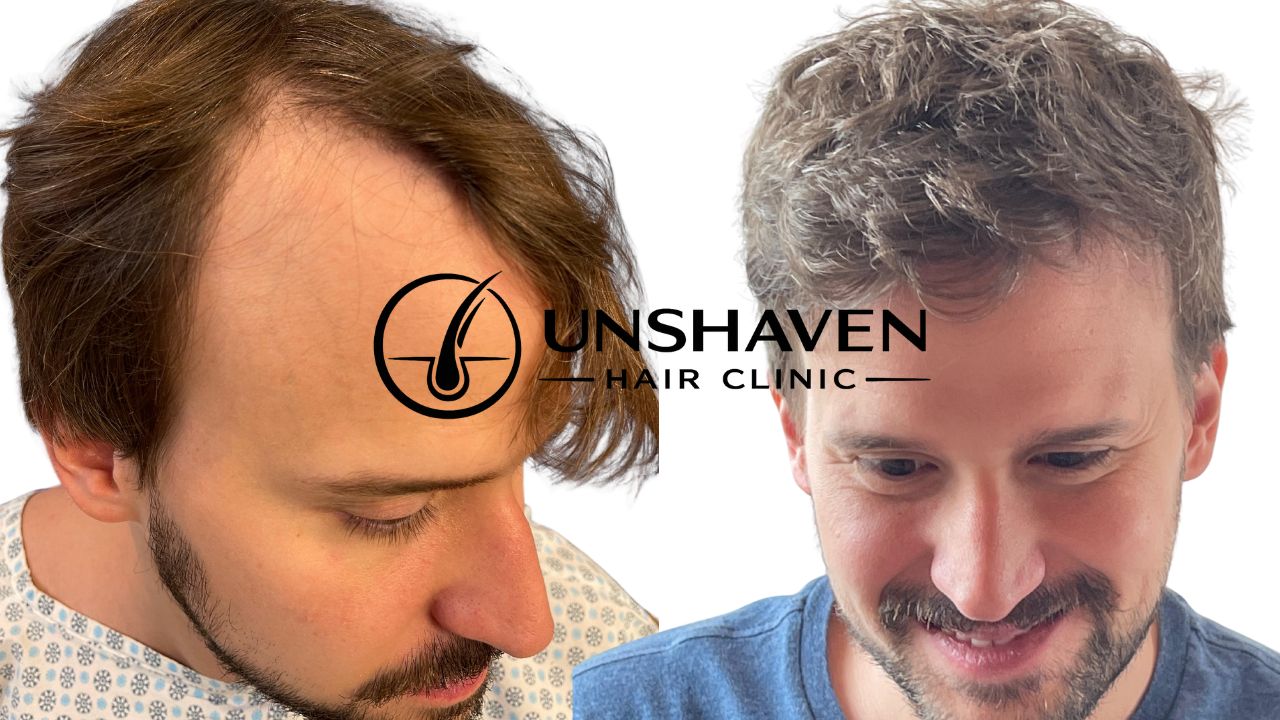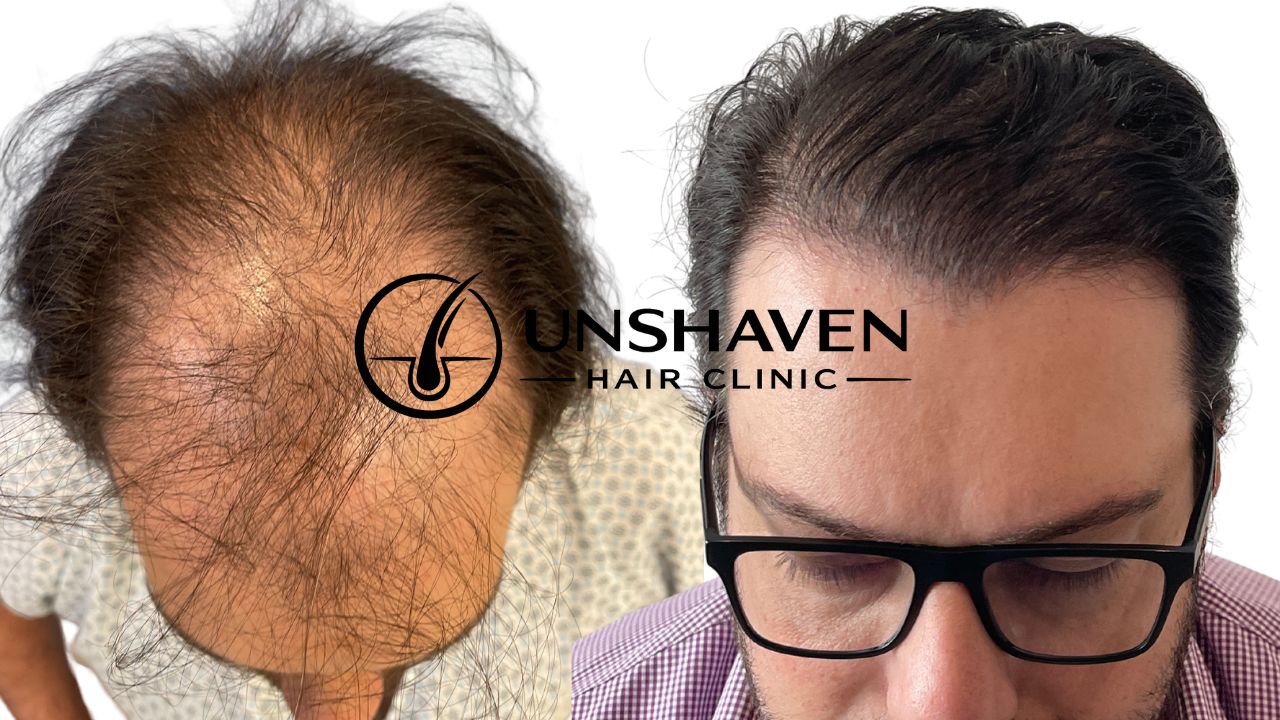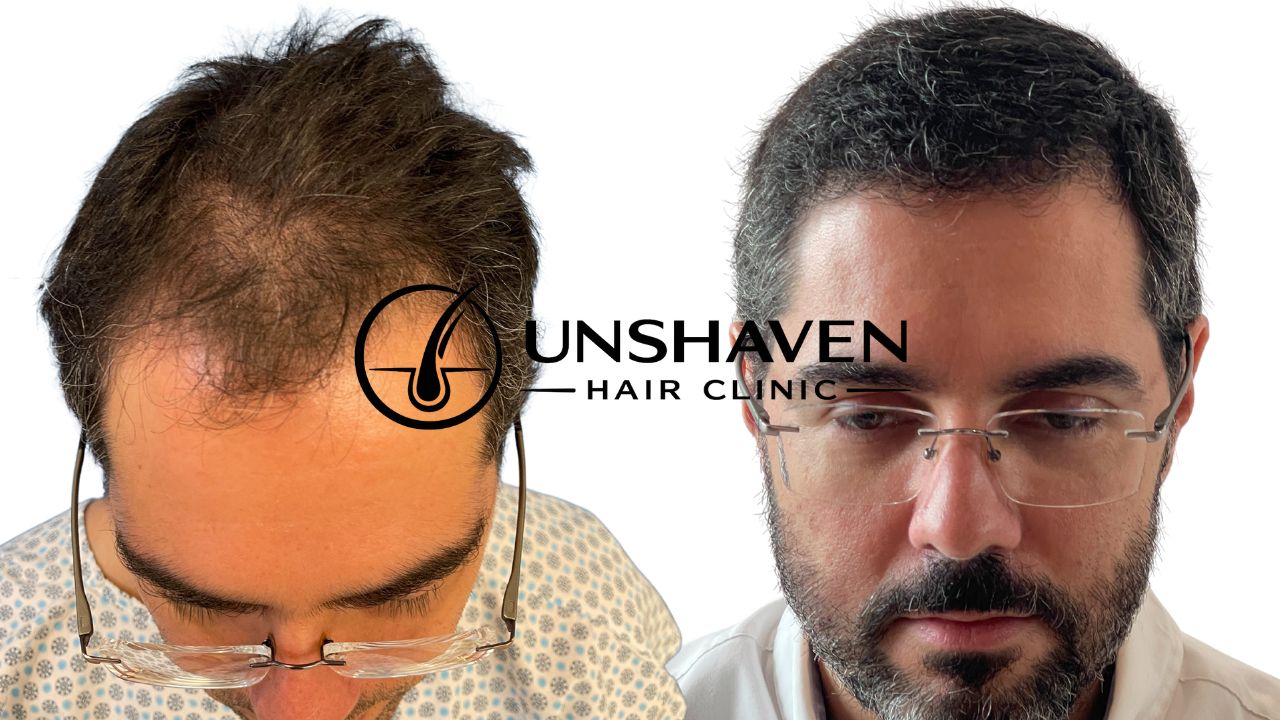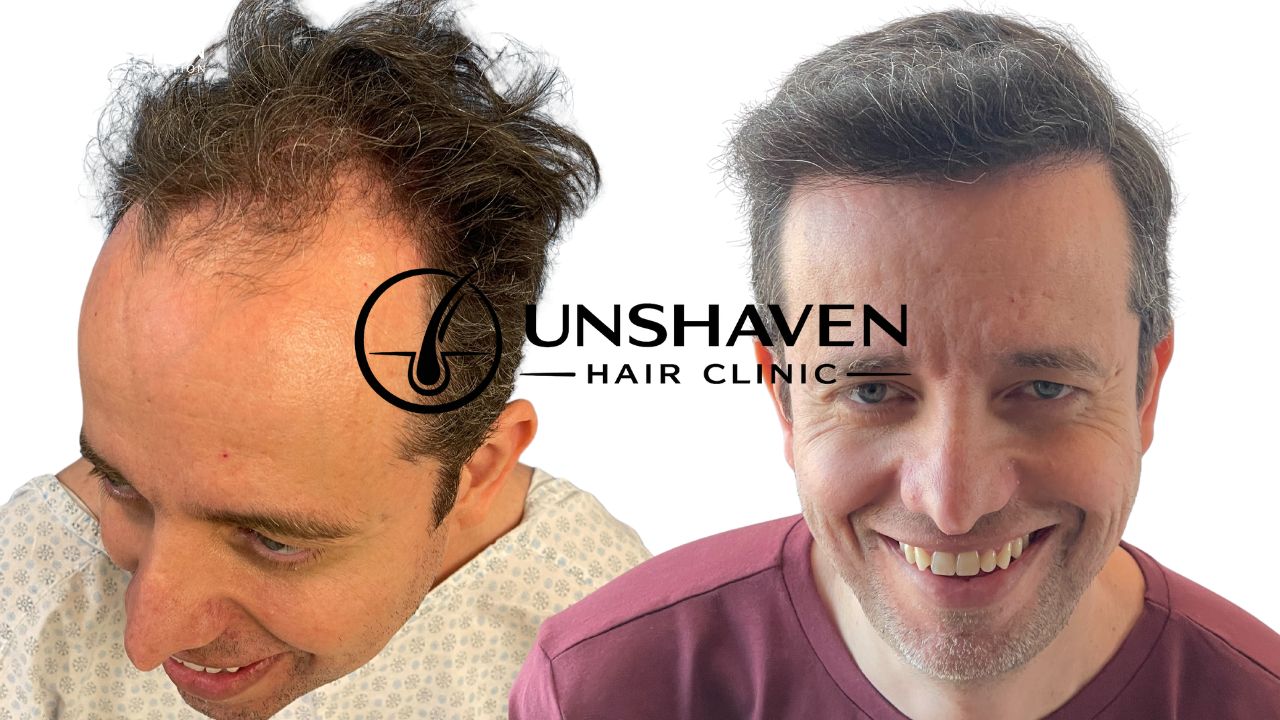
At Unshaven Hair Clinic, patients often ask if scalp discomfort is linked to hair loss. Dr. Ross Kopelman, an expert in hair restoration and shaveless FUE, explains that symptoms like itching or burning can sometimes occur alongside alopecia.
Understanding why this happens can help guide the right next steps.
Key Takeaways
- Alopecia can cause itching or a burning sensation, but this usually comes from scalp inflammation or irritation rather than hair loss itself.
- Symptoms like itching, tingling, or scalp discomfort vary by type, with conditions like alopecia areata more likely to involve these sensations.
- An itchy or burning scalp with hair loss may also be linked to underlying scalp conditions such as dandruff, psoriasis, or folliculitis.
- Hair loss is not always permanent, as some types allow regrowth while others may be progressive and require long-term management.
- Identifying the cause through proper evaluation is key, since treatment and outcomes depend on the specific type of alopecia and scalp health.
Does Alopecia Itch?
Alopecia can cause itching, but it does not happen in every case. Hair loss itself usually does not create the sensation. Instead, the scalp reacts to changes such as irritation or inflammation.
Some people notice itching, tingling, or mild scalp pain before or during shedding. Others experience no symptoms at all. The answer to whether alopecia itches depends on the underlying cause of hair loss.
How Alopecia Affects the Hair Growth Cycle
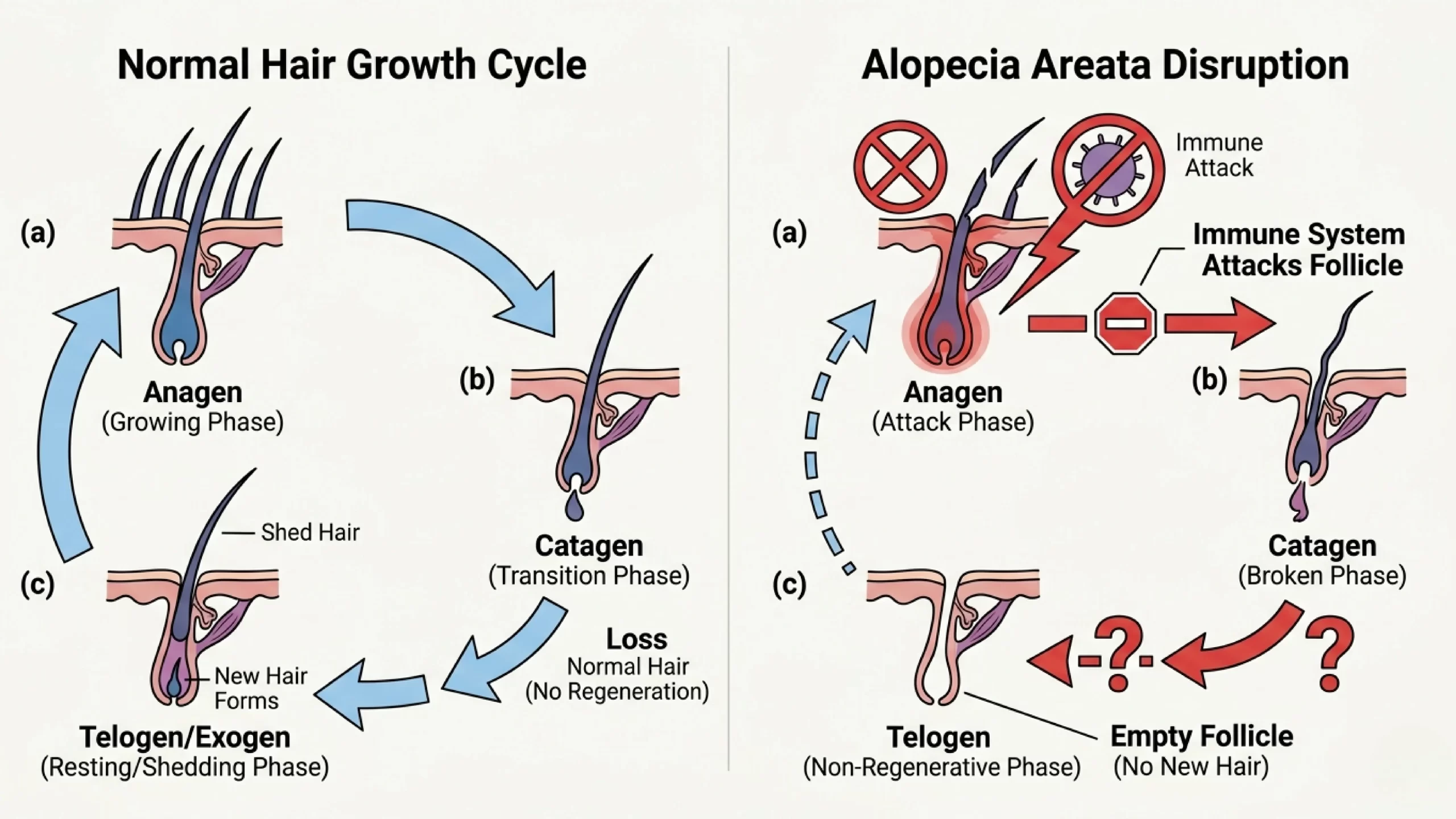
Hair grows in cycles that include growth, rest, and shedding phases. Alopecia can disrupt this cycle, which leads to increased shedding or thinning. In some conditions, hair enters the shedding phase earlier than expected.
In autoimmune types like alopecia areata, the immune system targets hair follicles during the growth phase. This interrupts normal hair production and can lead to sudden hair loss. These changes can also trigger sensations like itching or tingling in some individuals.
Medical Explanation: Why Alopecia Can Cause Itching
Alopecia itself does not directly cause itching, but the underlying processes often do. In conditions like alopecia areata, the immune system targets hair follicles, which can lead to localized inflammation. This inflammation may stimulate nerve endings in the scalp, resulting in itching, tingling, or a burning sensation.
Inflammation is a key factor in many cases where hair loss and scalp discomfort occur together. When the immune response affects the follicle, it can disrupt the normal hair growth cycle while also increasing scalp sensitivity. This explains why some individuals notice itching before visible hair shedding begins.
In other cases, itching may be linked to coexisting scalp conditions rather than alopecia itself. Seborrheic dermatitis, psoriasis, and folliculitis can all irritate and may overlap with hair loss. Identifying whether symptoms come from inflammation, immune activity, or external irritation is essential for proper management.
Alopecia Causes and Risk Factors
Alopecia can develop due to a combination of internal and external factors. In many cases, there is not a single cause, but rather multiple contributing elements working together. This is why symptoms and patterns vary between individuals.
Common risk factors include:
- Autoimmune conditions
- Family history of hair loss
- Hormonal changes
- Physical or emotional stress
Some individuals may also have associated conditions such as thyroid disorders or other immune-related issues. These factors can influence both the development of hair loss and symptoms like itching or burning.
Types of Alopecia and Symptoms
Different types of alopecia present in different ways. Some may involve symptoms, while others do not.
Causes vs Symptoms of Alopecia
Understanding the difference between causes and symptoms can make hair loss easier to interpret.
Causes refer to what triggers hair loss, such as immune activity, genetics, or stress. These factors influence how and why alopecia develops.
Symptoms are what you notice, such as shedding, thinning, itching, or a burning scalp and thinning hair sensation. Identifying both helps guide evaluation and treatment decisions.
Alopecia areata is an autoimmune condition that causes patchy hair loss. Common alopecia areata symptoms include sudden shedding and sometimes itching or tingling before hair falls out. These sensations are not always present but can occur in early stages.
Androgenetic alopecia causes gradual thinning over time. It usually does not involve itching, so symptoms may suggest another scalp issue. Telogen effluvium leads to increased shedding after stress or illness, and the scalp often feels normal.
Traction alopecia develops from repeated tension on the hair. Tight hairstyles can irritate the scalp and lead to soreness or thinning in affected areas.
Scarring vs Non-Scarring Alopecia
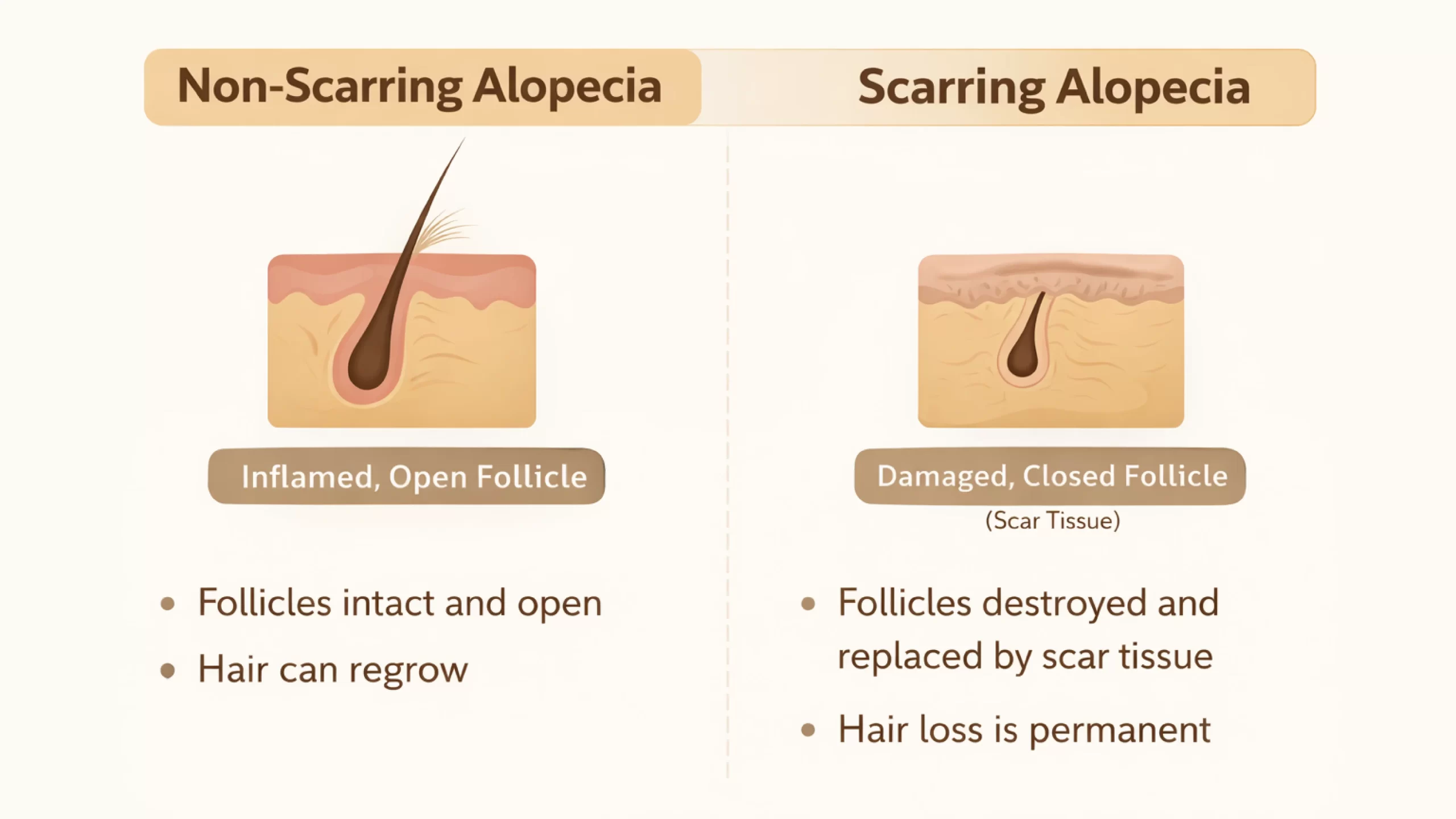
Alopecia is often grouped into scarring and non-scarring types. This distinction helps explain whether hair can grow back.
Non-scarring alopecia means the hair follicles remain intact. In these cases, regrowth is often possible, even if it takes time. Examples include alopecia areata and telogen effluvium.
Scarring alopecia involves damage to the hair follicles. This can prevent regrowth in affected areas. These forms are less common but require early evaluation.
Sudden Bald Spot with Itching
A sudden bald spot on a woman’s head is commonly linked to alopecia areata. These patches often appear quickly and may feel slightly itchy or sensitive before hair loss becomes visible.
The scalp in these areas usually looks smooth without scarring. However, not all bald spots are caused by alopecia areata. Other conditions can also lead to localized hair loss.
If a patch appears suddenly, it is helpful to monitor changes. Expansion, discomfort, or new patches may require further evaluation.
How to Tell If Alopecia Is Active
Active alopecia means hair loss is still progressing. Recognizing early signs can help guide decisions.
Common signs include:
- Increased daily shedding
- Expanding or new patches
- Short, broken hairs
- Itching or a burning scalp and a thinning hair sensation
Some people also notice a burning scalp feeling before shedding increases. These signs do not always mean permanent loss, but they suggest ongoing activity.
Is Alopecia Permanent or Can Hair Grow Back?
Alopecia does not always lead to permanent hair loss. The outcome depends on the type and cause of the condition.
In some cases, such as alopecia areata, hair may regrow without treatment. However, the process can be unpredictable, and hair may fall out again in cycles. Some individuals experience periods of regrowth followed by new shedding.
In progressive types like androgenetic alopecia, thinning usually continues over time and may lead to bald headedness. Treatments may help slow this process, but may not fully reverse it. Temporary conditions often improve once the underlying trigger is resolved.
Hair Loss Timeline and Regrowth Expectations
Hair loss does not follow the same timeline for everyone. The duration and recovery process depend on the type of alopecia and individual factors.
| Hair Loss Type | Shedding Duration | Regrowth Outlook | Key Details |
|---|---|---|---|
| Telogen Effluvium | 2–6 months | High, typically full recovery | Triggered by stress, illness, or medications |
| Alopecia Areata | Sudden onset, duration varies | Moderate to high, cycles unpredictable | Patchy loss, autoimmune factors involved |
| Androgenetic Alopecia | Progressive over years | Low without treatment | Gradual thinning, pattern hair loss |
- Shedding duration for Telogen Effluvium is approximate; exact duration varies per individual.
- Regrowth outlook for Alopecia Areata is unpredictable; depends on autoimmune response.
How Alopecia Is Diagnosed
Diagnosing alopecia involves evaluating both hair patterns and scalp health. A detailed history helps identify when hair loss started and how it has changed over time.
A physical examination of the scalp allows for assessment of shedding patterns, inflammation, and skin changes. This step helps differentiate between different types of alopecia.
In some cases, further tests may be used:
- Dermoscopy to examine follicles closely
- Blood tests to identify underlying conditions
- Scalp biopsy in unclear situations
Alopecia Treatment and Scalp Relief
Alopecia treatment depends on identifying the underlying cause. Managing inflammation is often the first step, as it can reduce itching and burning.
Treating scalp conditions such as dandruff or irritation can improve comfort. When the scalp is stable, it may also support healthier hair growth. Gentle hair care routines can help reduce further irritation.
It is important to understand that results vary between individuals. Not all treatments are suitable for every type of alopecia. A proper evaluation is needed to determine the most appropriate approach.
Simple Ways to Relieve an Itchy Scalp
Some basic steps can help reduce discomfort when dealing with an itchy scalp.
- Use mild, non-irritating shampoo
- Avoid scratching or rubbing the scalp
- Keep the scalp clean without over-washing
- Limit the use of harsh styling products
These steps do not treat all causes of alopecia, but they can help reduce irritation. A balanced routine often improves overall scalp comfort.
How to Stop Alopecia Areata Itching and Spread
Managing alopecia areata focuses on reducing symptoms and monitoring progression. To reduce itching, it helps to use gentle products and avoid scratching the scalp.
To address concerns about spread, there is no guaranteed method. However, early evaluation and appropriate management may help control progression in some individuals. Tracking changes over time can provide useful insight.
Hair Loss Itchy Scalp Shampoo: Does It Work?
A hair loss itchy scalp shampoo can help when symptoms are caused by scalp irritation. These shampoos may reduce flaking and calm itching.
They are most useful for conditions like dandruff or mild inflammation. However, they do not treat all forms of alopecia. Deeper causes, such as autoimmune or hormonal hair loss, require a different approach.
What to Avoid with Alopecia
If you have itchy scalp alopecia, certain habits can make symptoms worse. Avoiding common triggers can help protect the scalp.
Key things to avoid include:
- Harsh or strongly fragranced products
- Tight hairstyles that pull on the hair
- Excessive heat styling
- Scratching or rubbing the scalp
Alopecia Itching vs Dandruff Itching
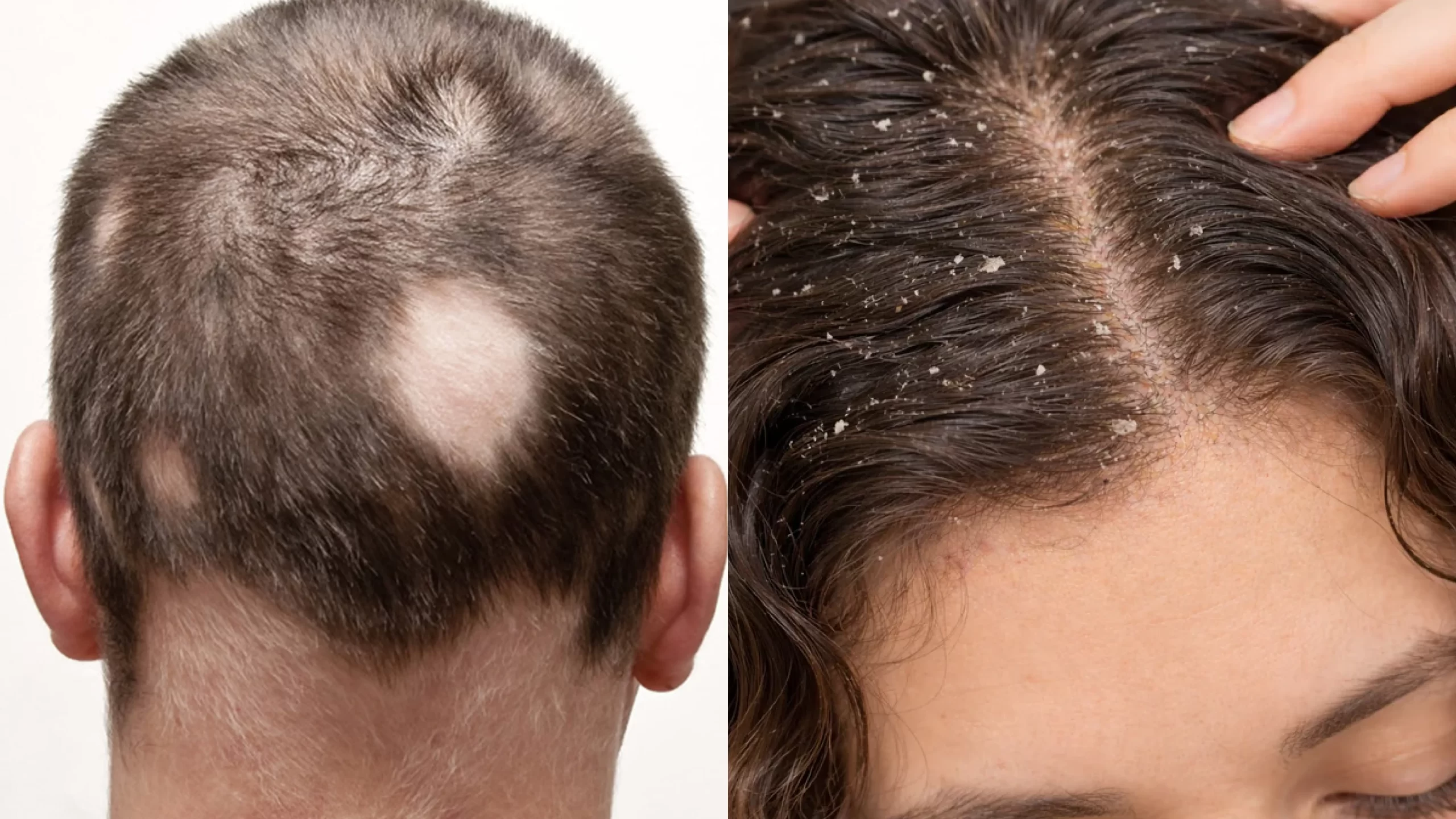
Not all scalp itching has the same cause. Understanding the difference can help guide care.
Alopecia-related itching is often linked to inflammation or immune activity. It may occur with shedding or patchy hair loss.
Dandruff-related itching is usually caused by an oil imbalance and often includes visible flakes. Both conditions can occur together, which can make symptoms harder to interpret.
When to See a Doctor
It is important to seek evaluation if symptoms continue or worsen. Certain signs may indicate the need for medical attention.
These include:
- Persistent itching or alopecia scalp pain
- Burning or sensitive scalp
- Sudden or patchy hair loss
- Redness, scaling, or sores
- Hair that does not grow back
Ready to Take the Next Step?
Whether you are just starting to notice thinning or already exploring hair trasplant options.
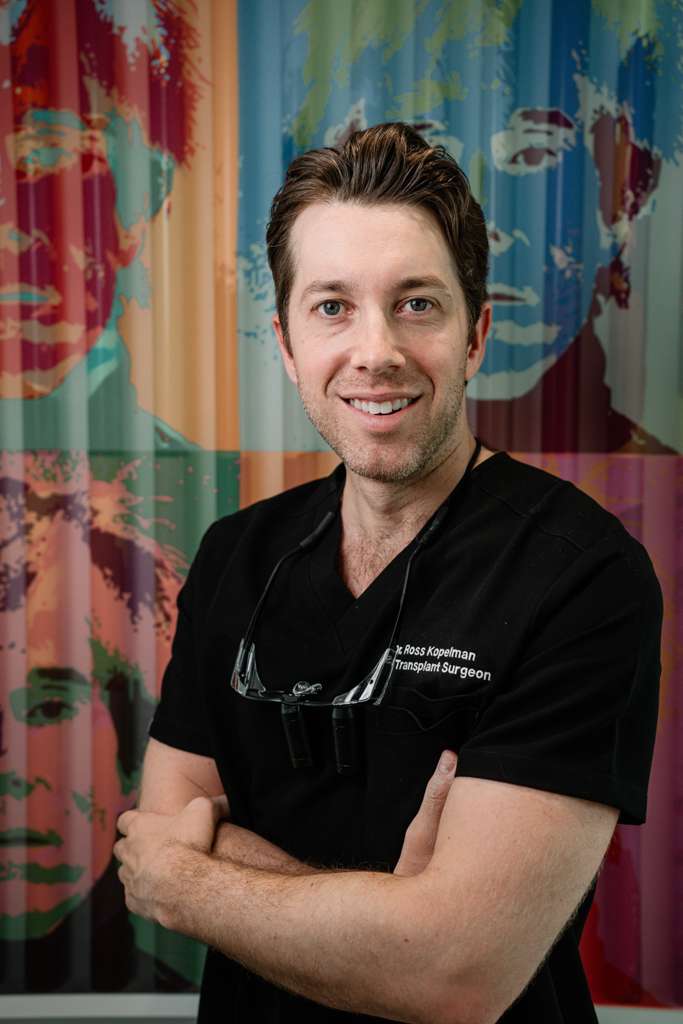
Dr. Kopelman offers personalized consultations tailored to your goals.
Ready to Take the Next Step?
Whether you are just starting to notice thinning or already exploring hair trasplant options, Dr. Kopelman offers personalized consultations tailored to your goals.
Is Alopecia Dangerous or Serious?
Most types of alopecia are not harmful to overall health. However, they can affect appearance and may cause emotional stress.
Some forms are temporary and improve over time. Others may be long-term and require ongoing management. The level of concern depends on the type and progression of hair loss.
Where Hair Restoration Fits
Hair restoration is usually considered after the scalp condition is stable. Active inflammation or untreated scalp issues are addressed first.
Suitability depends on the type of alopecia and the availability of donor hair. At Unshaven Hair Clinic, Dr. Ross Kopelman focuses on personalized planning to determine if procedures like shaveless FUE are appropriate.